How Much Water Should You Actually Drink?
A doctor explains real daily fluid targets, why eight glasses is a myth, how urine color works, and how much to drink when working in heat.

The short version
- Typical adequate total water intake is around 2.0 liters a day for women and 2.5 liters for men from all sources, of which roughly a fifth to a third comes from food.
- The eight-glasses rule has no scientific origin; pale straw urine and the absence of thirst are better everyday guides than any fixed number.
- Working in heat changes everything: around 240 milliliters every 15 to 20 minutes is standard guidance, capped at about 1.5 liters per hour, because overdrinking can dangerously dilute blood sodium.
See a doctor promptly if
These are the signs that change this from something to read about into something to act on.
- Confusion, headache, vomiting or seizure after drinking large volumes of plain water during heavy exertion: possible low blood sodium, a medical emergency
- Passing very little or no urine for several hours, dizziness on standing, or a fast weak pulse
- Sudden unexplained thirst with frequent urination and weight loss. This pattern needs a diabetes check, not more water
For an average adult in a temperate climate, adequate total water intake is around 2.0 liters a day for women and 2.5 liters for men, counting everything. Drinks, food, and the water your body makes from metabolism. Since roughly 20 to 30 percent of that comes from food, the drinks component is closer to 1.6 and 2.0 liters, or six to eight average glasses. North American reference values are set a little higher, at 2.7 and 3.7 liters total.
Those are population averages, not personal prescriptions. Body size, activity, climate, illness, pregnancy and clothing all move the number, sometimes by liters.
Where the eight-glasses rule came from#
Nowhere useful. It appears to be a misreading of a 1940s US recommendation which stated an intake of about 2.5 liters a day and then added, in the next sentence, that most of this quantity is contained in prepared foods. The second sentence got lost and the myth outlived it.
The more reliable everyday signals are simple. Pale straw urine. Passing urine every three to five hours in the day. No persistent thirst. Body weight stable from morning to morning.
When you genuinely need more#
- Heat and physical work. This is the big one, and it is covered below.
- Fever, vomiting or diarrhea. Oral rehydration solution is better than plain water when losses are large.
- Pregnancy and breastfeeding. Roughly 300 ml and 700 ml more per day respectively.
- Kidney stones. People who form stones are usually advised to drink enough to produce at least 2.5 liters of urine daily.
- High altitude, low humidity, air travel, air-conditioned plants.
When more is not better#
Some people need to restrict fluid, on medical advice: advanced heart failure, advanced kidney disease, liver disease with fluid retention, and certain hormone disorders. If you have been given a fluid limit, general advice about drinking more does not apply to you.
There is also a real risk at the top end. Drinking far beyond your losses, particularly plain water during heavy sweating, dilutes blood sodium and causes exercise-associated hyponatraemia. It presents as headache, nausea, confusion and, at worst, seizures, and it has killed athletes and workers who were doing what they believed was the safe thing.
Working in heat#
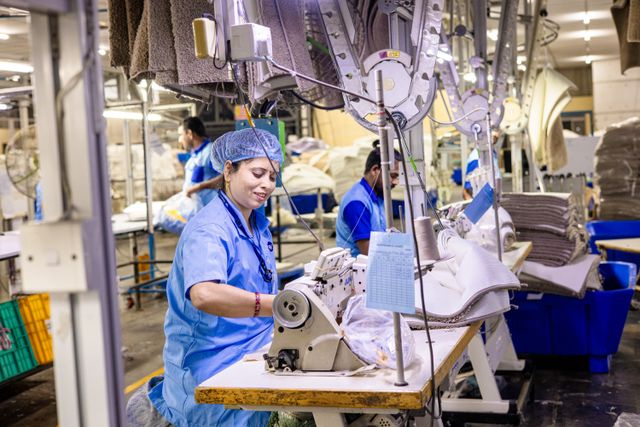
Occupational guidance is specific because thirst lags behind sweat losses during hard work.
- About one cup, roughly 240 ml, every 15 to 20 minutes during heat work
- Steadily, not in large gulps
- Capped at around 1.5 liters per hour and roughly 12 liters per day
- With salt replacement, normally salted meals, or an oral rehydration or low-sugar electrolyte drink, once heavy sweating continues beyond about two hours
Employers should be providing cool drinking water within easy reach of the work area, not across the site, plus shaded rest points and a work-rest cycle that scales with the conditions. A workforce that has to walk five minutes for water will not drink enough, and no amount of health promotion changes that.
Where to take this next#
If you work in heat, a foundry, a bakery, a construction site, an outdoor job in summer, hydration is only one part of a much bigger safety picture that includes acclimatisation and recognizing heat stroke. The full guide to heat stress and hydration at work sets out the numbers a workplace should run on.
Common questions
Do tea and coffee count towards fluid intake?
Is clear urine the goal?
Can drinking more water help me lose weight or clear my skin?
Sources
Still not sure what this means for you?
Bring your reports to a call with one of our doctors. Leave with a written summary and the right questions for your own doctor.